
Audit-Ready ESG - The Missing Link Between Sustainability and Finance
Across global markets, ESG reporting is facing a quiet credibility test.
More disclosures are being published than ever before. Yet assurance observations are rising, regulator questions are becoming sharper, and CFOs are increasingly uneasy with the numbers being presented alongside financial statements. The gap is not in intent or ambition. It sits in how ESG data is owned, governed, reviewed, and defended.
For many organizations, ESG reporting still lives outside the disciplines that make financial reporting reliable. As a result, sustainability narratives struggle to withstand audit scrutiny, board questioning, and investor review.

The credibility gap in ESG reporting
Assurance failures are increasing globally for a simple reason. ESG data has grown in volume and visibility faster than the systems that support it.
Unlike financial information, ESG metrics often lack consistent ownership, documented methodologies, and internal controls. Data is collected from multiple teams, consolidated late in the reporting cycle, and reviewed primarily for presentation rather than accuracy or traceability.
CFOs are acutely aware of this gap. When ESG numbers enter annual reports, integrated reports, or regulatory filings, they are implicitly carrying financial-grade expectations. Without comparable rigour behind them, discomfort is inevitable.
ESG data is not the same as sustainability data
A critical shift organizations must make is recognising that not all sustainability data is audit ready ESG data.
Audit-ready ESG data requires defined ownership, documented calculation logic, clear boundaries, and evidence trails that can be independently reviewed. In many organizations, these elements are still missing.
Common challenges include unclear responsibility for specific KPIs, inconsistent data definitions across locations, limited documentation of assumptions, and an absence of structured internal review mechanisms. Sustainability teams are often expected to bridge these gaps alone, without the governance support that finance teams rely on.
Organizations that are building confidence in their ESG disclosures are not doing more reporting. They are reporting differently.
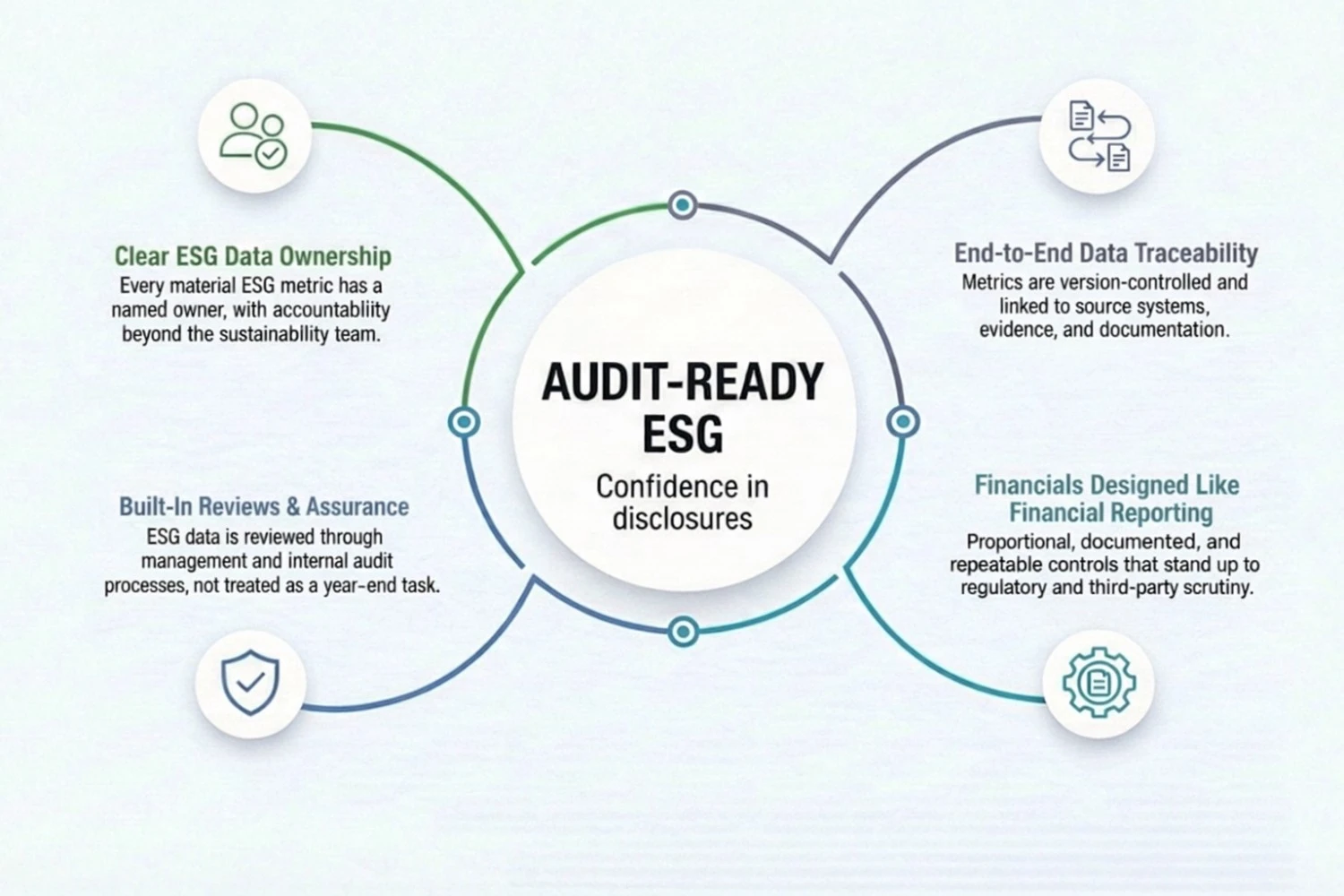
They assign clear data owners for every material ESG metric, with accountability that extends beyond the sustainability function. They maintain version control and evidence repositories that allow data to be traced back to source systems or records. They embed ESG reviews into internal audit and management assurance processes rather than treating assurance as a year-end exercise.
Most importantly, they design ESG controls with the same mindset used for financial reporting, proportional, documented, and repeatable.
The role of CFOs and audit committees
CFOs and audit committees play a decisive role in closing the ESG credibility gap.
When ESG is embedded into financial governance structures, discussions shift from narrative comfort to data confidence. Material ESG risks are assessed not only for reputational impact but for financial exposure, regulatory consequence, and long-term value creation.
Audit committees that actively review ESG methodologies, controls, and assurance plans early in the cycle reduce last-minute surprises and strengthen board oversight. This alignment does not dilute sustainability ambition. It makes it durable.
From report to system
The future of ESG reporting will be shaped less by templates and more by systems.
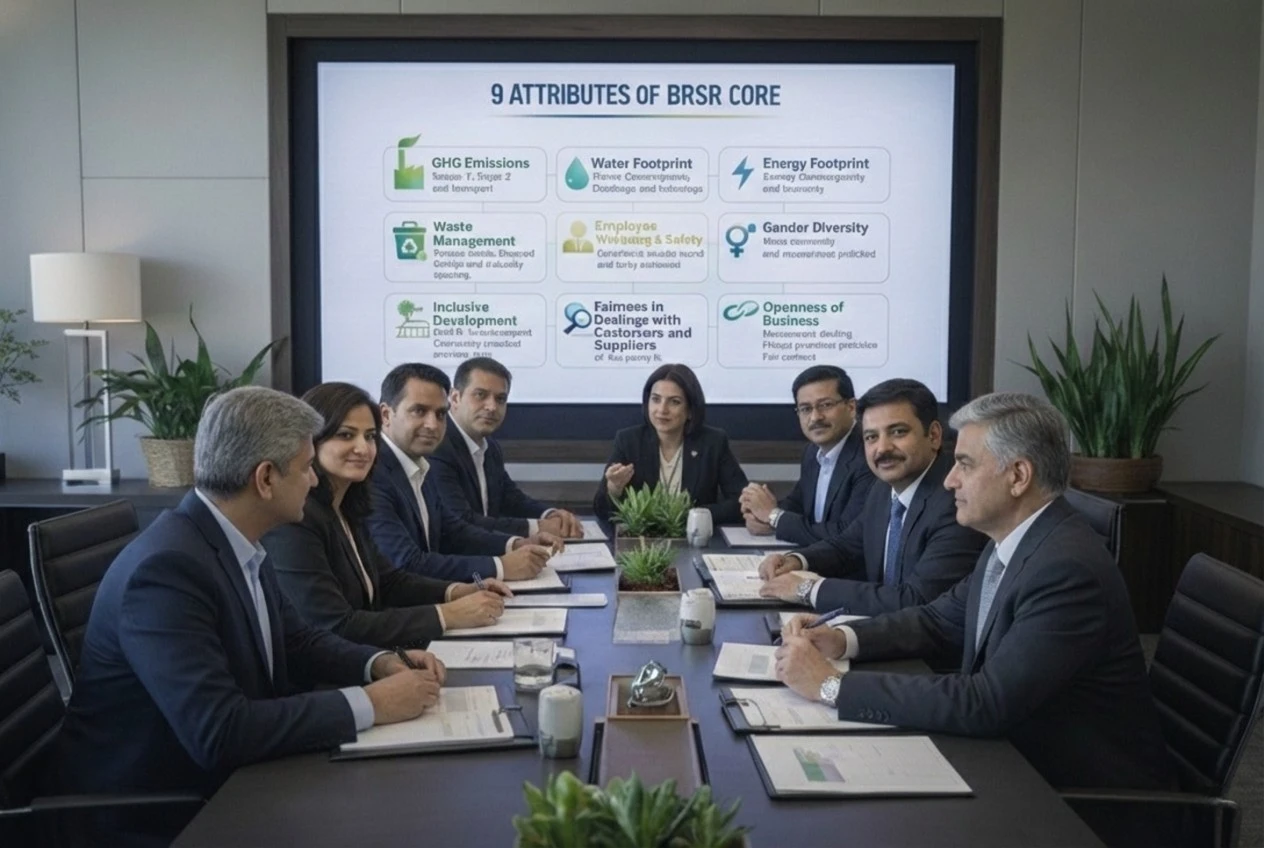
As regulatory expectations mature, including in India under BRSR Core, organizations will be evaluated on how ESG data is generated, governed, and assured, not just how it is presented.
Tooling, processes, and cross-functional alignment matter far more than design polish. When ESG reporting is treated as a system rather than a document, credibility follows naturally.
At Bevolve, we see audit-ready ESG as an enabler, not a constraint. It allows sustainability teams to focus on insight rather than defence, and finance teams to engage with ESG confidently rather than cautiously.
In the years ahead, the organisations that lead will be those that recognise this shift early and build ESG reporting on foundations strong enough to stand alongside financials.
Contact Us – catalyst@bevolve.ai
Related posts