Choosing the Right ESG Reporting Partner
In the final weeks of the financial year, a certain urgency takes over.
The data is in. Drafts are circulating. Meetings become more frequent. And somewhere in between reviews and approvals, one question comes up again and again.
Who should we partner with to bring this report together?
For many organisations, the decision is made quickly. A familiar agency, a competitive quote, a tight timeline.
It feels efficient. It feels practical.
Yet this is often where things begin to drift.
Because choosing an ESG reporting partner is not an operational decision. It quietly shapes how your business will be understood by investors, regulators, and the market over the next year.
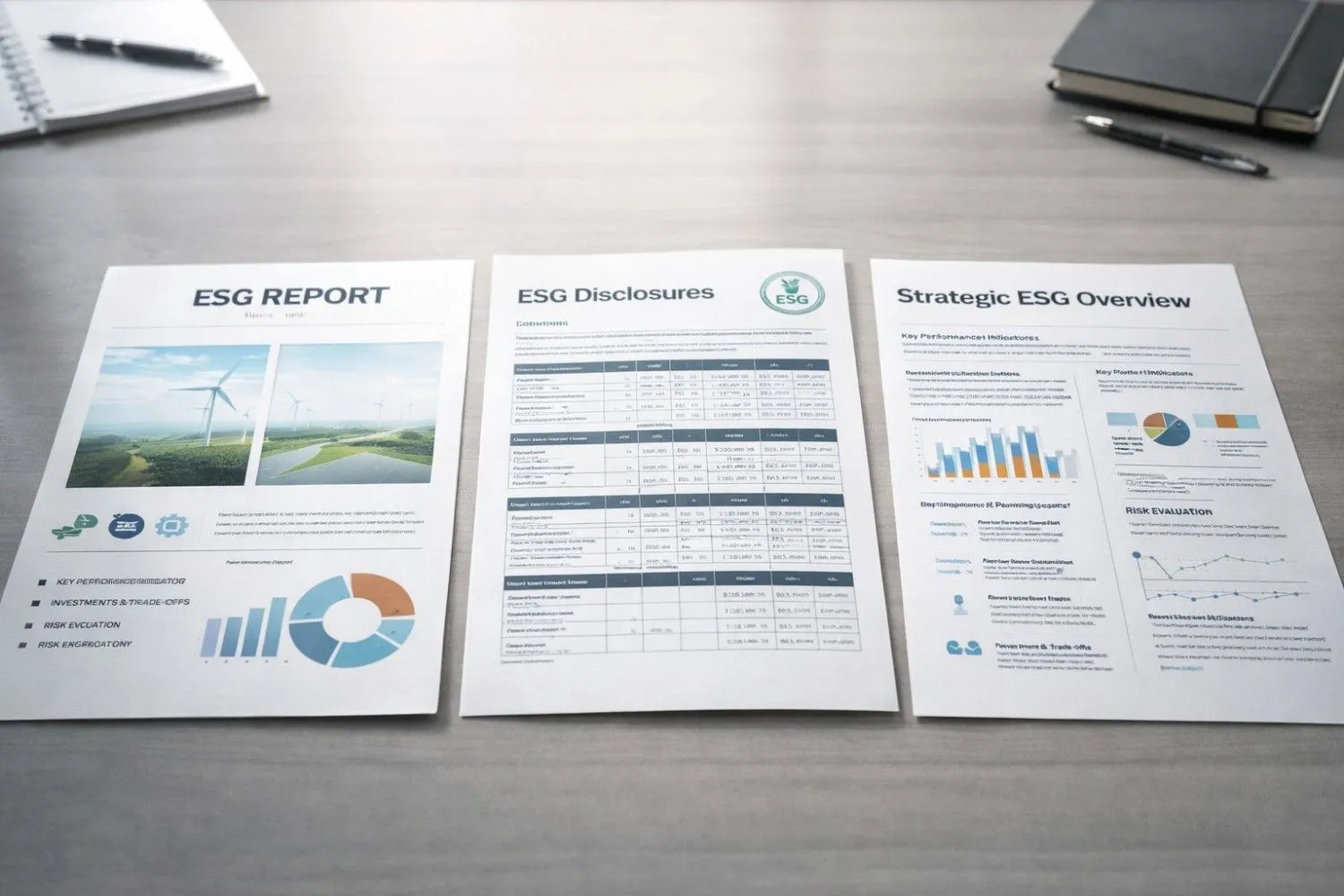
The Final Stage Trap
At this point, most teams are evaluating partners through a very immediate lens.
- Design quality
- Speed of delivery
- Previous report samples
- Commercial feasibility
These are valid considerations. They help move things forward.
Yet something important gets missed.
ESG reporting at this stage is less about assembling a document. It is about sharpening what that document communicates: Clarity, Credibility, Direction.
And that requires stepping back, even when time feels limited.
If you pause and look at the market, most partners fall into three broad groups.
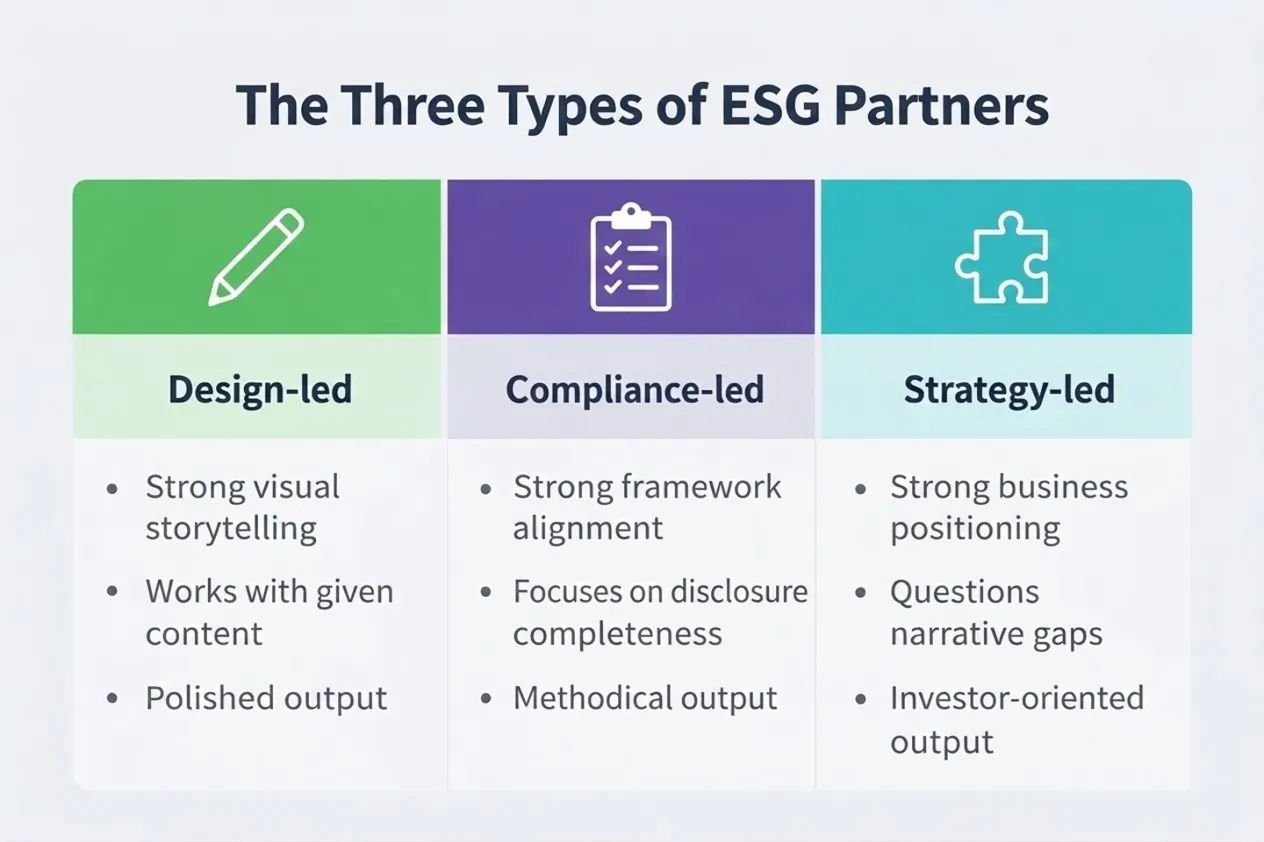
Design-led agencies:
Strong on presentation and brand expression, often working with available content rather than challenging underlying substance.
Compliance-led consultants:
Strong on framework alignment and disclosure completeness, with less emphasis on narrative strength.
Strategy-led ESG partners:
Strong on business positioning, narrative refinement, and investor relevance.
What You Should Actually Evaluate
At this stage, the most useful shift is simple.
Move from asking what the partner will deliver to asking what they will help you see more clearly.
You might find yourself exploring questions like:
- Can they help improve ESG outcomes, or will they focus only on completing the report
- Do they understand how your business creates value, beyond sustainability language
- Will they connect narrative with actual performance and data, even when it is uncomfortable
- Are they comfortable working across frameworks while keeping the story coherent
- Can they bring an external perspective that challenges internal assumptions
These are not checklist questions. They are conversations that reveal depth.
The Role of the Right Partner
When the right partner comes into the process, the shift is noticeable.
They begin by clarifying. What truly matters in your ESG journey becomes sharper.
They then align. Data, narrative, and strategy start to move together, instead of in parallel tracks.
Finally, they strengthen. The report begins to hold up under scrutiny, not just internal review.
At that point, the work feels less like execution and more like refinement.
A Decision That Extends Beyond March
It is easy to think of this as a year-end decision.
In reality, the choice of partner carries forward.
It influences how your current report is received, how your next cycle evolves, and how your organization builds confidence in its ESG direction.
In many ways, this is about setting a tone for what comes next.
Final Thought
In the rush to publish, speed often feels like the most important metric.
Yet ESG reporting today carries a different weight. It shapes trust.And trust builds quietly, when what you present aligns closely with how your business actually operates.
Related posts