

How EU's Green Fortress Could Neutralize India's FTA Gains
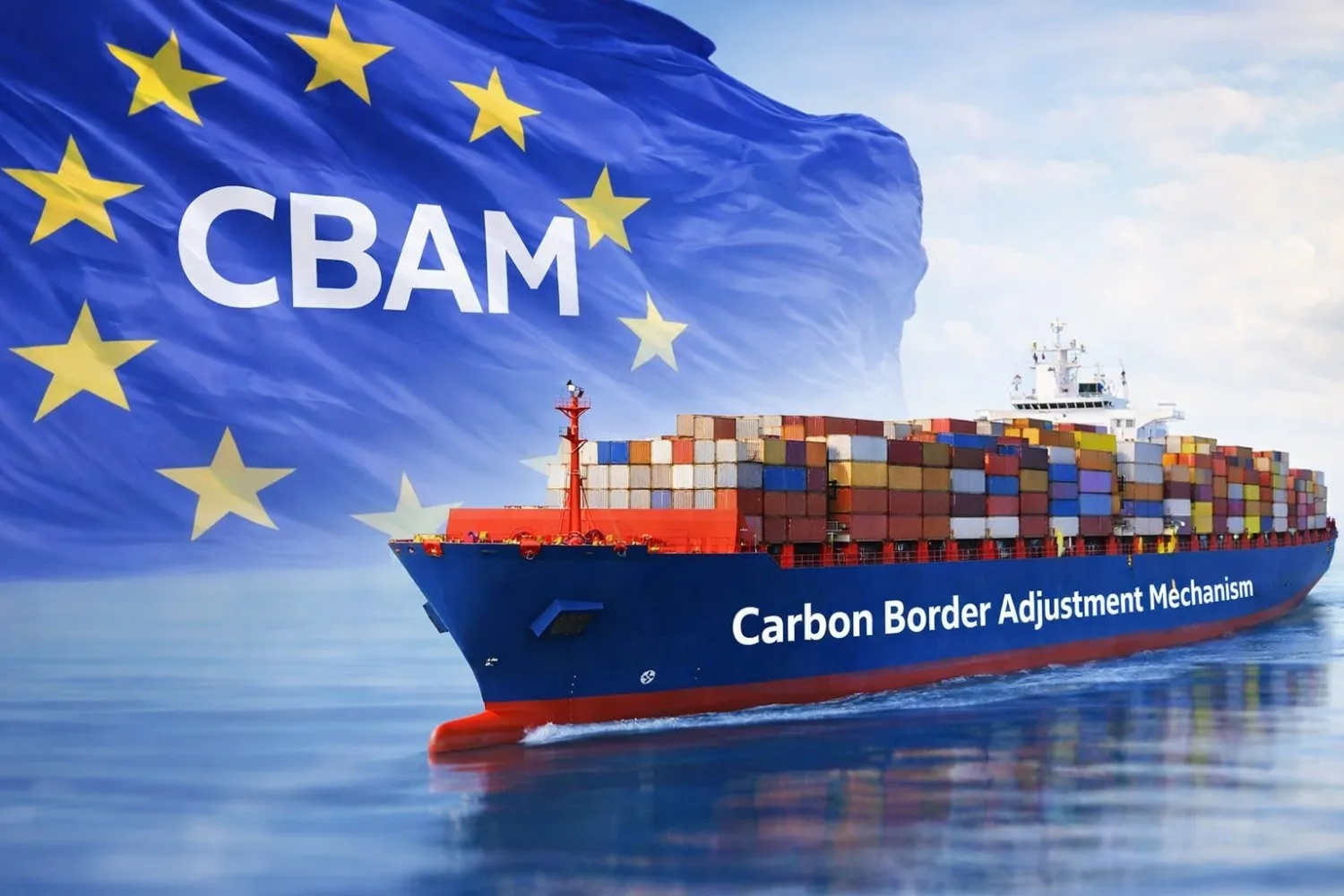
When India and the European Union concluded their landmark Free Trade Agreement, much of the public narrative focused on tariff elimination and expanded market access. On paper, it is transformative. More than 95 percent of traded goods are expected to benefit from tariff liberalisation between two of the world’s largest democratic economies.
But beneath the celebratory headlines lies a more complex commercial reality.
While the tariff door has opened wider, the compliance gate has become more sophisticated and far more demanding through CBAM, DPP and EUDR. In effect, the EU has replaced visible tariffs with embedded sustainability conditions. The EU views climate regulations as non-negotiable components of its trade architecture, exempting no partners from carbon accountability.
The Carbon Border Adjustment Mechanism (CBAM), the Digital Product Passport (DPP) and the EU Deforestation Regulation (EUDR) together form an interlocking compliance architecture. These instruments will determine which Indian companies genuinely benefit from the FTA and which experience margin pressure, shipment delays or exclusion from the EU market. Market access is now increasingly tied to regulatory alignment and credible data. It is increasingly governed by carbon intensity, supply chain traceability and digital transparency.
For Indian corporations, this is not just an ESG story. It is a margin story.
From Tariffs to Embedded Carbon
For decades, cost arbitrage was the bedrock of Indian exports. Lower production costs, skilled labour and scale advantages enabled access to global markets. Tariffs were a visible friction point that trade negotiations sought to remove.
CBAM changes that equation fundamentally.
Under CBAM, selected imports into the EU, including steel, aluminium, cement, fertilizers, hydrogen and electricity, must bear a carbon cost equivalent to that faced by European producers under the EU Emissions Trading System. If an exporting country does not impose an equivalent carbon price, the difference must be paid at the EU border through CBAM certificates.
In simple terms, carbon now travels with the product.
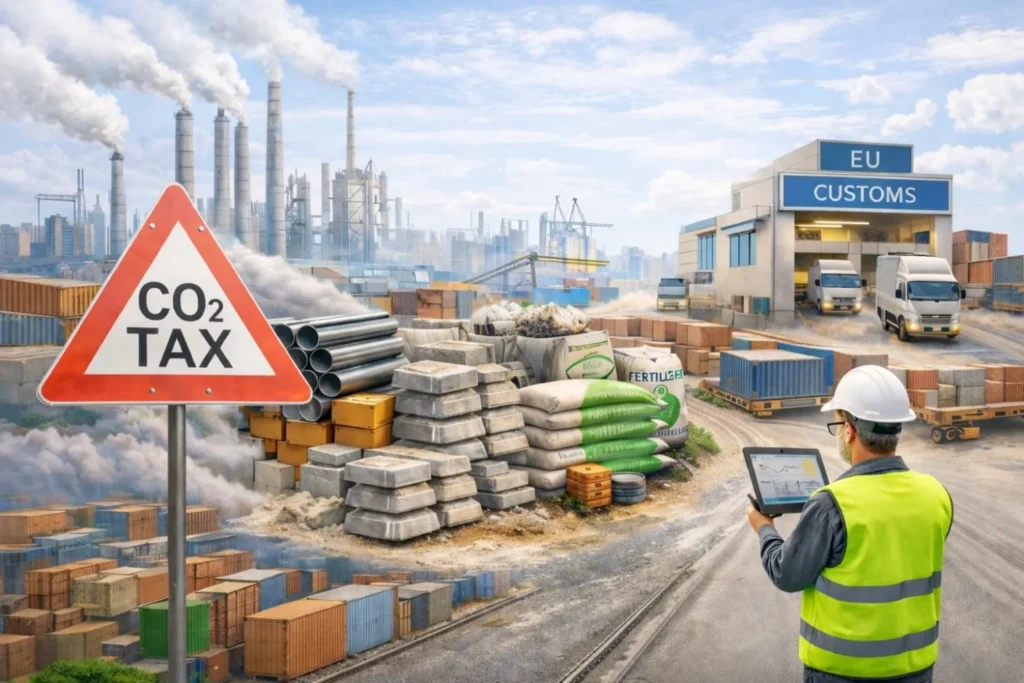
For Indian exporters in carbon-intensive sectors, this introduces a new variable cost linked directly to emissions intensity. Even with zero tariffs under the FTA, a high-carbon product will face a border adjustment reflecting European carbon prices.
This is where a critical concept enters the boardroom: Carbon Cost Margin (CCM). It should now sit alongside currency and commodity risk in board discussions.
CCM represents the difference between the effective carbon price embedded in domestic production and that applied in the EU. Under CBAM, this margin becomes monetised. It is no longer abstract. It hits the landed cost.
CFOs must now model landed cost as:
Landed Cost = FOB Price + Logistics + (Embedded Carbon × EU Carbon Price)
If embedded emissions multiplied by the EU carbon price significantly increase total cost, tariff savings can be neutralized or even reversed. If the carbon-adjusted landed cost erodes pricing competitiveness, the EU-facing business model requires immediate recalibration.
Carbon exposure is no longer an environmental indicator. It is a pricing determinant.
The Digital Product Passport: Transparency at Scale
While CBAM addresses carbon intensity, the Digital Product Passport addresses information asymmetry.
Mandated under the EU’s Eco-design for Sustainable Products Regulation (ESPR), the DPP will require product-level digital records containing data on material composition, carbon footprint, recycled content, durability, reparability and end-of-life characteristics.
Every product entering the EU market will increasingly require a digital identity.
For Indian manufacturers across textiles, automotive components, electronics and consumer goods, this creates a step change in operational expectations. Data must be granular, verifiable and digitally accessible. Estimates and aggregated disclosures will not suffice.
Three immediate challenges emerge:
1) Data availability across multi-tier supply chains. Many companies lack visibility beyond Tier 1 suppliers.
2) System integration. Legacy manufacturing systems are often not designed to generate product-specific environmental data.
3) Verification credibility. European buyers are unlikely to rely on self-certified declarations. Third-party assurance will become the norm.
DPP is not simply a reporting requirement. It demands digital transformation of sustainability information.
EUDR: Traceability as Legal Obligation
If CBAM prices carbon and DPP digitises transparency, the EU Deforestation Regulation introduces legal liability tied to land use.
EUDR requires companies placing specified commodities and derived products on the EU market to demonstrate that they are deforestation-free and legally produced. Covered commodities include cattle, cocoa, coffee, palm oil, rubber, soya and wood, along with many downstream products.

Each consignment must be supported by a due diligence statement including geolocation coordinates of production sites and proof of compliance with local laws.
The consequences of non-compliance are severe: fines, product confiscation, market bans and reputational damage.
For India, where agricultural and forest-linked supply chains often involve smallholder farmers and multiple intermediaries, traceability presents a structural challenge. Mapping farm-level geolocation, ensuring legal documentation and digitising records require investment and coordination far beyond traditional compliance models.
EUDR moves sustainability from corporate reporting into the realm of trade enforcement.
The EU–India FTA promises tariff relief, smoother customs procedures and deeper economic integration. Yet the combined effect of CBAM, DPP and EUDR introduces new non-tariff barriers that are data-driven and performance-based.
This creates a paradox.
Tariff elimination may improve gross margins. Compliance costs may compress net margins.
Companies must therefore shift focus from gross preferential margin to net preferential margin.
Net Preferential Margin = Tariff Savings − (CBAM Exposure + Compliance Investment + Rejection Risk)
In some sectors, particularly carbon-intensive industries, CBAM exposure could materially offset tariff savings if emissions intensity remains high.
In supply chains exposed to EUDR, even a small percentage of rejected consignments can erode profitability.
The FTA does not eliminate trade friction. It reshapes it.
India’s MRV Achilles Heel
The biggest risk for Indian companies is not just the carbon intensity itself, but the data used to report it. At the heart of CBAM and DPP lies Measurement, Reporting and Verification (MRV).
EU authorities require installation-specific, auditable emissions data calculated using recognised methodologies and verified by accredited third parties. If such data is unavailable or deemed unreliable, default values may be applied. These are often based on conservative benchmarks.
India’s existing MRV infrastructure, while evolving, exhibits critical gaps when benchmarked against EU requirements. For Indian companies, the challenge is twofold.
First, emissions data is frequently aggregated at facility or corporate level rather than at product or consignment level.
Second, verification ecosystems remain uneven. Accredited verifiers with deep familiarity with EU requirements are limited.
Beyond emissions, EUDR adds geospatial traceability requirements that many supply chains are not currently equipped to provide.
The risk is not only higher compliance cost. It is the risk of being assigned conservative default emission values, often reflecting worst-performing benchmarks that inflate carbon liability and undermine competitiveness.
In this context, data discipline becomes strategic capital.
A Strategic Response Framework
Indian corporations cannot afford to treat these regulations as isolated compliance projects. They require an integrated trade and sustainability strategy.
First, governance must be elevated. CBAM, DPP and EUDR should sit within enterprise risk management frameworks, with board-level oversight. Carbon cost margin and deforestation risk should be quantified and embedded in capital allocation decisions.
Second, MRV systems must be strengthened. Companies should move towards installation-specific emissions accounting aligned with global standards, supported by credible third-party verification. Product-level carbon accounting should be prioritised for EU-facing portfolios.
Third, decarbonisation must accelerate. Energy efficiency, renewable energy sourcing, low-carbon materials and process optimisation directly reduce CBAM liability. Each tonne of avoided emissions translates into lower border cost.
Fourth, supply chain engagement must deepen. For EUDR compliance, collaboration with suppliers and smallholders is essential. Traceability cannot be achieved through contractual clauses alone. It requires training, digital tools and shared accountability.
Fifth, digital infrastructure must be modernised. DPP compliance will demand interoperable systems capable of linking material inputs, emissions data and lifecycle attributes at product level.
This transformation is not inexpensive. But the alternative may be more costly.
| Top Exporters to EU | CBAM Applicability | DPP Applicability | EUDR Applicability | What It Means for the Industry |
|---|---|---|---|---|
|
Steel & Iron Products |
High |
Possible (future DPP expansion) |
None |
CBAM imposes carbon pricing at EU borders → exporters must measure and reduce embedded emissions or face higher landed costs, reducing export margins. |
|
Aluminium & Other Metals |
High |
Possible |
None |
Similar to steel: carbon costs now material to competitiveness; product data visibility increasingly expected. |
|
Cement & Construction Materials |
Medium |
Possible |
None |
CBAM affects pricing for carbon-intensive construction exports; proactive decarbonisation and MRV systems become vital. |
|
Textiles & Apparel |
Not targeted (yet) |
High |
Medium (for some raw materials) |
DPP will require product composition, lifecycle, traceability data → brands will need robust digital data systems; raw material traceability may also intersect with EUDR if linked to deforestation-linked fibers. |
|
Electrical & Electronics |
Core CBAM sectors not included today
|
High |
Low |
DPP will apply as sustainability criteria expand → product exports will need digital passports with data on materials, carbon, recyclability. |
|
Machinery & Engineering Goods |
Not CBAM targeted |
Medium-High
|
None |
DPP expected to expand into complex machinery → requires lifecycle transparency and digital traceability; planning ahead reduces compliance risk. |
|
Pharmaceuticals & Chemicals |
Not in current CBAM scope |
Medium |
None |
DPP may impact lifecycle and composition reporting; not carbon-priced but transparency expectations rising. |
|
Gems & Jewellery |
NO |
Medium |
Low |
Product traceability and sustainability claims are increasingly expected; digital passports can differentiate brands. |
|
Agri-commodities & Forest-linked Products |
Not in CBAM |
Low |
High |
EUDR is directly relevant: traceability from farm to shipment is compulsory; non-compliance can block EU market access. |
Beyond Compliance: The Opportunity
It is tempting to frame CBAM, DPP and EUDR as protectionist instruments. Yet from a strategic perspective, they also signal the direction of global trade.
Carbon transparency, traceability and digital accountability are unlikely to remain European anomalies. Other jurisdictions are studying similar mechanisms.
Companies that invest early in credible MRV systems and decarbonisation pathways gain multiple advantages: stronger access to ESG-sensitive customers, improved investor confidence, better positioning for green finance and resilience against future regulation.
In this sense, the EU’s regulatory framework can act as a catalyst for industrial upgrading.
The FTA, therefore, should not be viewed purely as a tariff negotiation success. It should be seen as a signal that integration with the EU market requires alignment with its sustainability architecture.
Ultimately, This is a Leadership Challenge
While the access is free, entry may be expensive to the EU markets.
Will Indian companies respond defensively, seeking short-term relief and policy exceptions? Or will they treat this as a structural shift and invest in competitiveness defined by carbon efficiency and traceability?
The green trade wall is real. But it is not impenetrable.
The key lies in disciplined decarbonisation, credible data and strategic foresight.
The India–EU FTA opens opportunity. CBAM, DPP and EUDR define the conditions.
In this new era, sustainability is not a communications narrative. It is a trade variable. Those who understand this convergence will protect margins, secure market access and shape the next phase of India’s export growth story.
Those who do not may find that tariff freedom alone is not enough.